Does a bounce house rental company need insurance? Yes, and a professional vendor should be ready to prove it. When an inflatable rental is part of a family celebration, school field day, or public event, insurance is one of the clearest signs that a company operates as an established business. It shows the vendor can respond responsibly if an accident or property damage occurs.
Yes, a reputable rental company should carry general liability coverage even when local law does not require a specific policy. If you are asking does a bounce house rental company need insurance, look for a vendor that can explain its coverage. It should provide a current certificate of insurance when requested and pair that policy with documented safety procedures.
For customers, the practical question is not simply whether a vendor says it is insured. You should know what the policy covers, whether your venue has specific requirements, and how insurance fits alongside waivers, equipment standards, and proper setup. AJT Bounce & Events serves Massachusetts and Rhode Island with a safety-first approach, while the AJT Events team also supports clients seeking full-service event planning with AJT Events.
Does a Bounce House Rental Company Need Insurance?
Yes. A reputable bounce house rental company needs liability insurance before it delivers equipment to a customer's property, school, park, or public event. Inflatable rentals involve physical activity, anchoring, electrical equipment, and many moving participants. Insurance helps protect the company and gives hosts and venues confidence that defined risks are covered.
Insurance is not always required by a state statute for every private party. However, many venues, schools, parks, municipalities, and recreation departments require a certificate of insurance before approving an inflatable rental. That requirement helps the site owner confirm the vendor has taken responsibility for the risks connected with its business, which matters most for institutions and public events.
- Venue, school, and park requirements: Many locations will not approve an inflatable setup without proof of active coverage.
- Personal-liability risk: Without business insurance, an owner can face personal financial exposure after an injury or property-damage claim.
- Lawsuit protection: General liability coverage is designed to help address covered bodily-injury and property-damage claims.
- Professional accountability: Insurance is one sign a company is an established business rather than an informal side arrangement.
Can a waiver replace insurance?
No. A signed waiver may reduce or clarify certain risks, but it does not eliminate liability and does not replace a rental company's insurance. It is one part of a broader safety and risk-management process, not proof that coverage is unnecessary.
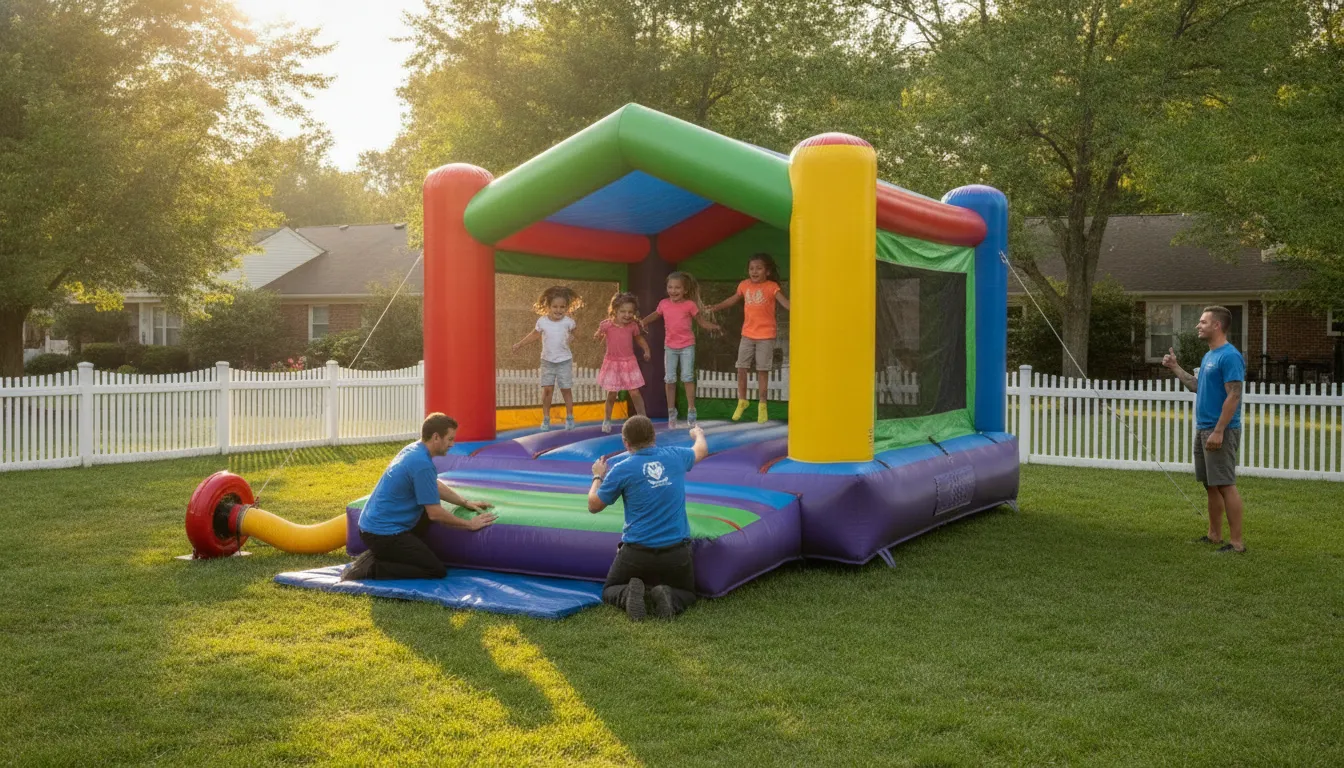
Does a Bounce House Rental Company Need Insurance Beyond General Liability?
General liability insurance is the cornerstone policy for an inflatable rental company. It is designed to help cover claims involving bodily injury or property damage connected to the company's operations, equipment, or event setup, including an incident during delivery, installation, or removal.
Typical general liability limits for rental businesses start at $1,000,000 per occurrence, although the right limits depend on the company's inventory, services, venues, and local requirements. A certificate documents the policy and its limits, but it does not replace the policy itself or expand coverage beyond its terms.
Common insurance policies for inflatable rental companies| Coverage type | What it protects | When you need it |
|---|
| General liability | Claims involving bodily injury, property damage, and related operational risks. | As the standard foundation for an inflatable rental business and most venue approvals. |
| Commercial umbrella | Additional liability limits above the underlying general liability policy. | When larger events, public venues, or contracts call for higher limits. |
| Workers' compensation | Work-related injuries or illnesses involving eligible employees. | When the company has employees and applicable state requirements or contracts call for it. |
| Property and equipment | Covered loss or damage involving inflatables, blowers, vehicles, tools, or stored business property. | When the company owns valuable equipment and needs protection beyond liability claims. |
| Event-specific or temporary coverage | Coverage structured for a particular event, date, location, or contractual requirement. | When a venue requires special terms, an additional insured, or short-term coverage. |
Coverage details and exclusions vary, so a rental company should confirm its policy with an insurance professional rather than relying on a waiver or a certificate alone. Ask what policy is in place, whether the limits meet your venue's requirements, and whether the coverage applies to the equipment and event being booked.
How to Request a Certificate of Insurance from a Rental Vendor
A Certificate of Insurance, or COI, gives your venue, school, municipality, or event team a concise record of the rental company's active coverage. Request it early, especially if your venue has an approval deadline, and a professional vendor should provide it without hesitation.
- Ask for the COI when you book. Tell the vendor why you need it and send any requirements supplied by the school, park, town, or venue so it prepares the correct certificate.
- Provide the exact legal name and address of the venue. Confirm the event date, setup date, and the name of the requesting organization; a certificate with an incomplete name may be rejected.
- Verify the additional-insured information. Ask whether the venue or property owner must be listed as an additional insured and check the certificate for correct spelling and address.
- Confirm the policy type and coverage limits. Look for commercial general liability coverage and compare the limits shown with any requirement your venue sets.
- Review the coverage dates and relevant exclusions. The policy must be active on the event date, and some venues require coverage during delivery and setup.
- Send the certificate to the venue and keep your own copy. Save the original PDF with your agreement, waiver, and event records for a clear record of coverage at booking.
Insurance is one part of a responsible rental process. For more questions to raise with a vendor, review this bounce house safety and insurance requirements guide.
Why a Licensed, Insured Bounce House Rental Company Matters
Insurance works best alongside documented safety practices and experienced setup. AJT Bounce & Events is a fully licensed and insured Massachusetts and Rhode Island rental company. It has served more than 100 zip codes since 2005 and helps schools, municipalities, venues, and hosts evaluate it as a professional vendor.
AJT's inflatables meet or exceed ASTM F2374 standards, a meaningful consideration for municipal and corporate venues with formal compliance requirements. The standard does not replace insurance, and insurance does not replace safe operating procedures; together they provide a more complete framework for managing risks during delivery, setup, supervision, and takedown.
Safety checks happen before guests arrive
Before an inflatable is used, AJT's inspection process checks seam integrity, tests anchor stress, and confirms the blower functions properly. The setup team also inspects the surface and uses appropriate anchoring, including stakes or sandbags based on the site, so concerns are addressed before children or guests enter the unit.
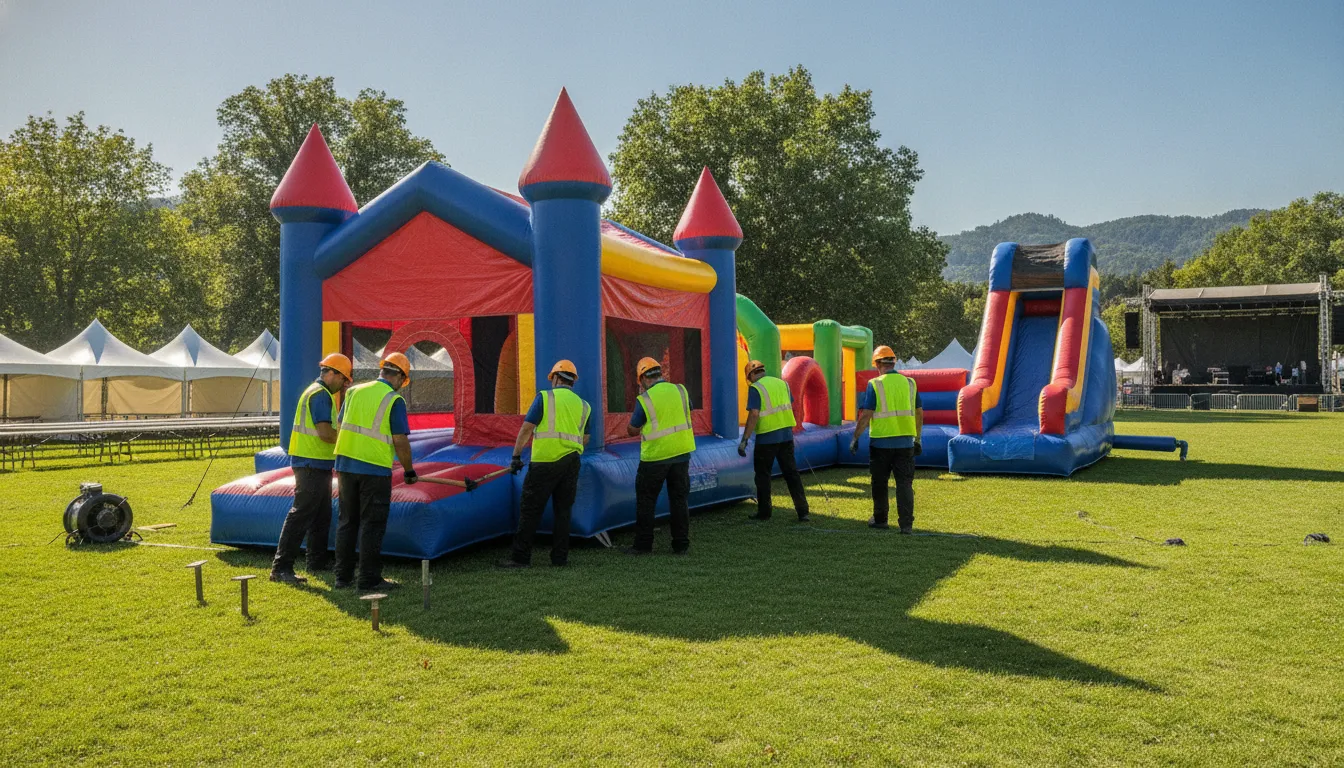
Coverage supports schools and public events
Risk-conscious organizers often need more than a verbal assurance before approving a vendor. Schools, camps, recreation programs, towns, and venues may request proof of insurance, safety information, or documentation in advance. For field days, review AJT's guide to insurance for school event bounce house rentals, and for fairs and festivals see this resource on rental company insurance for public events.
Questions to Ask Before Hiring Any Rental Company
A rental company should answer safety and insurance questions clearly before you book. A reputable vendor will understand that parents, schools, venues, and municipalities need more than a verbal assurance. Use the questions below to confirm the policy and safety process before signing.
Do you carry general liability insurance?
Answer: General liability insurance is the standard coverage for inflatable rental businesses and generally addresses claims involving bodily injury or property damage connected with the rental operation. Insurance matters even for a single unit because an accident can create substantial liability regardless of inventory size.
Can you provide a certificate of insurance?
Answer: The company should be able to provide a current certificate of insurance, or COI, when your venue or organization requests one. Ask whether the certificate can identify the event location and any additional-insured requirements that schools, parks, or towns require.
What are your coverage limits?
Answer: Ask for the policy limits, not just the name of the insurer. General liability limits for rental businesses commonly start at $1,000,000 per occurrence, but the right amount can depend on the venue, event type, and contract, so confirm any venue minimum before booking.
What are your safety and anchoring procedures?
Answer: Ask how the crew inspects the unit, evaluates the setup surface, and anchors the inflatable. A thorough process should cover seam integrity, blower function, anchor stress, and suitable stakes or sandbags. For more detail, review this guide to bounce house safety and insurance requirements.
Are your units certified to ASTM standards?
Answer: Ask whether the equipment meets or exceeds applicable ASTM F2374 standards for inflatable amusement devices. The answer should be specific and supported by the company's operating and safety documentation, which is especially useful when booking for a school or public venue.
Frequently Asked Questions
Does a bounce house rental company need insurance?
Yes. Liability insurance helps protect a rental company if a guest is injured or property is damaged during an event. It may not be required by every statute, but venues, schools, parks, and municipalities commonly ask for proof of coverage before approving an inflatable setup.
Can a signed waiver replace bounce house business insurance?
No. A waiver can explain risks and may reduce certain claims, but it does not provide comprehensive protection against liability. A responsible rental company should use waivers as one part of its safety process, not as a substitute for commercial insurance.
Does a company need insurance if it rents only one bounce house?
Yes. A smaller inventory does not eliminate the possibility of an injury, property-damage claim, or venue requirement. Insurance needs should reflect the equipment, operating area, events served, and coverage limits rather than only the number of inflatables owned.
What kind of insurance should an inflatable rental company carry?
General liability insurance is the standard starting point and is designed to address claims involving bodily injury and property damage connected with the rental operation. Before booking, ask whether the policy is commercial, what exclusions apply, and whether the company can provide a current certificate of insurance.
What happens if a bounce house business operates without insurance?
The owner may have to handle a covered lawsuit or settlement personally, putting business and personal finances at risk. Lack of coverage can also prevent bookings at schools, public parks, and other venues that require a certificate of insurance, so ask for documentation before signing a contract.
Ready to Book With Confidence?
Choosing a rental company that takes insurance and safety seriously can make planning your event easier. AJT Bounce & Events is fully licensed and insured, with inflatables selected and prepared for celebrations across Massachusetts and Rhode Island. If you are ready to schedule your bounce house or inflatable rental, book your rental with AJT Bounce & Events.
<< Return to news